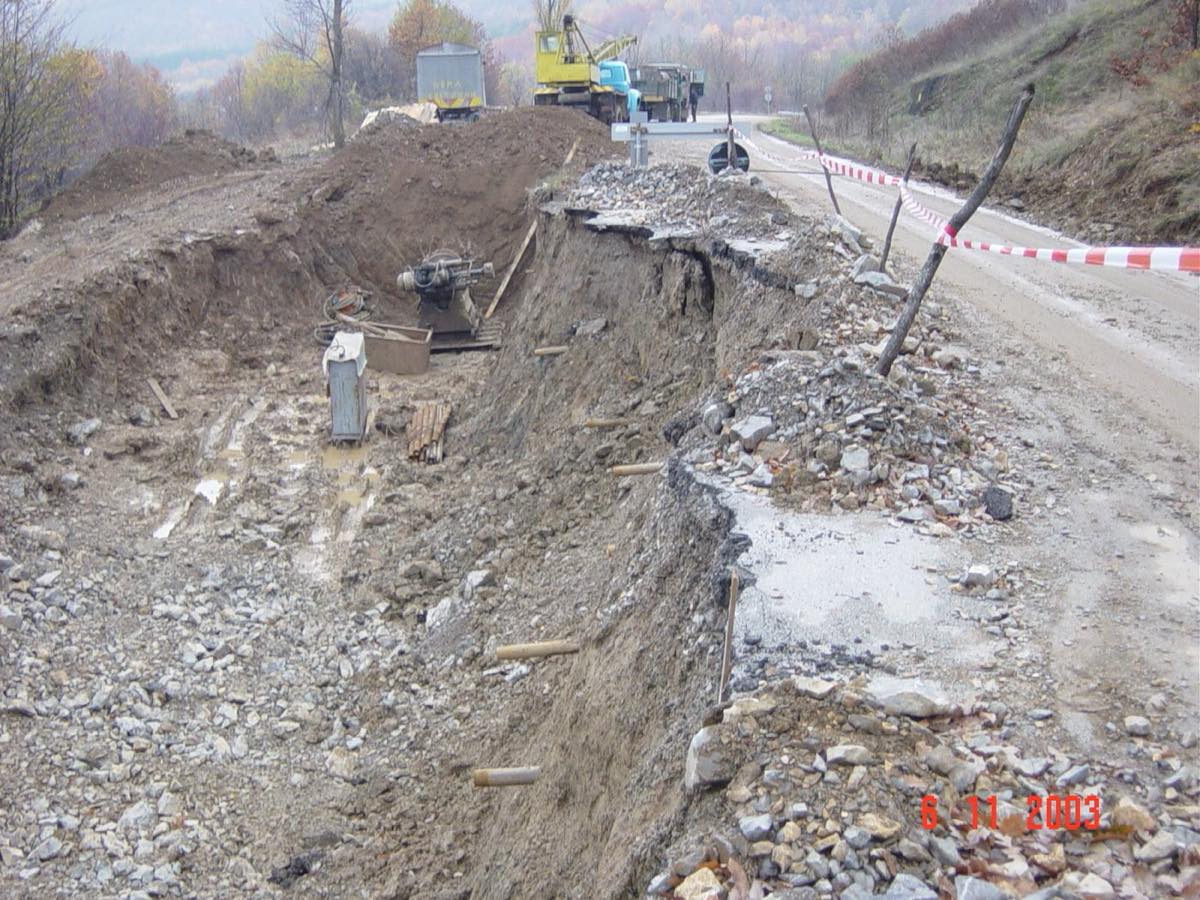
The „Ezerishte“ landslide, Svoge
The task
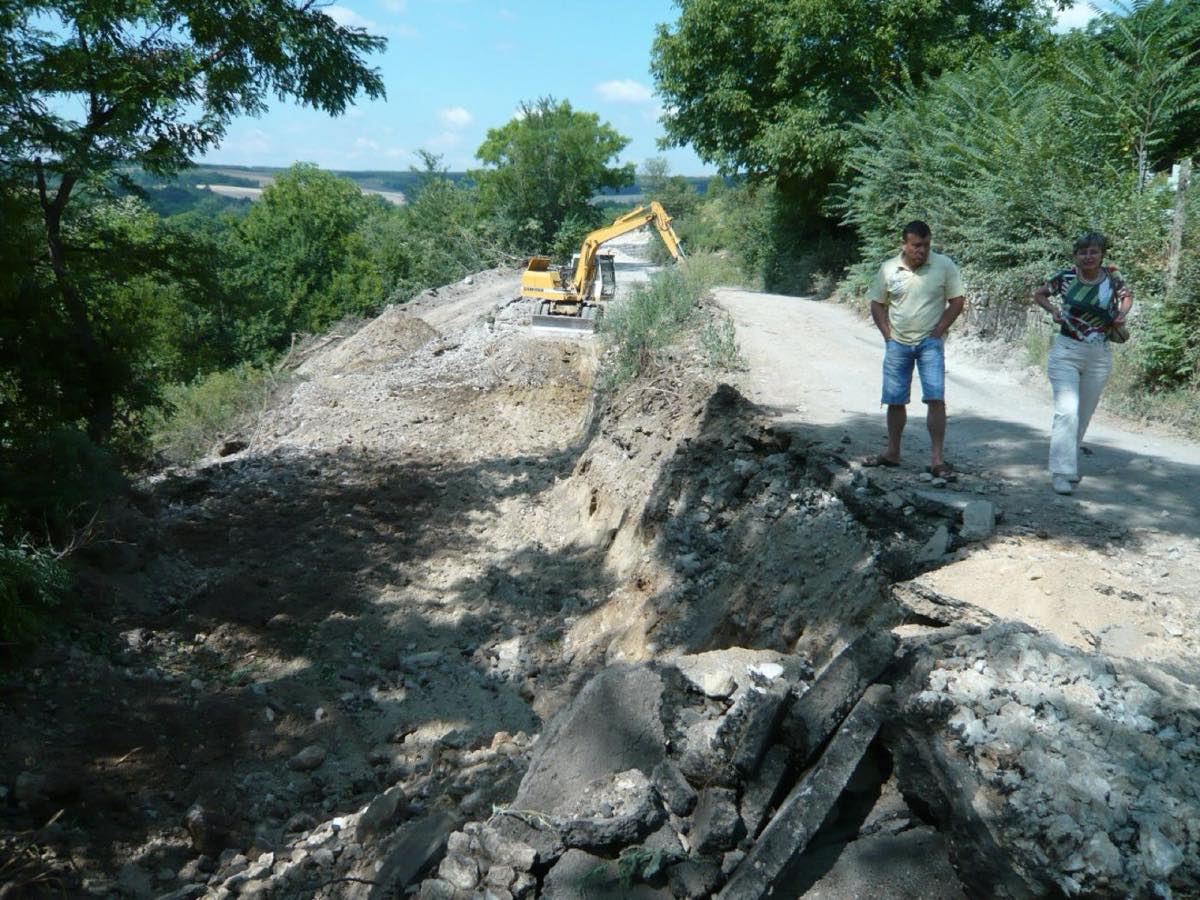
Ezerishte belongs to a group of large landslides that developed in early 2001. The task was to establish the mechanism of movement — without it any stabilisation design is guesswork — and to forecast how the slope would behave in the years that followed.
Investigation
Field and laboratory investigations were carried out across the whole landslide body. On that basis a working hypothesis for the mechanism was developed: the position of the slip surface, the role of groundwater and the sequence of movement of the individual blocks.
The study was later extended into a project funded by the National Science Fund and grew into the preparation of a doctoral dissertation.
Outcome
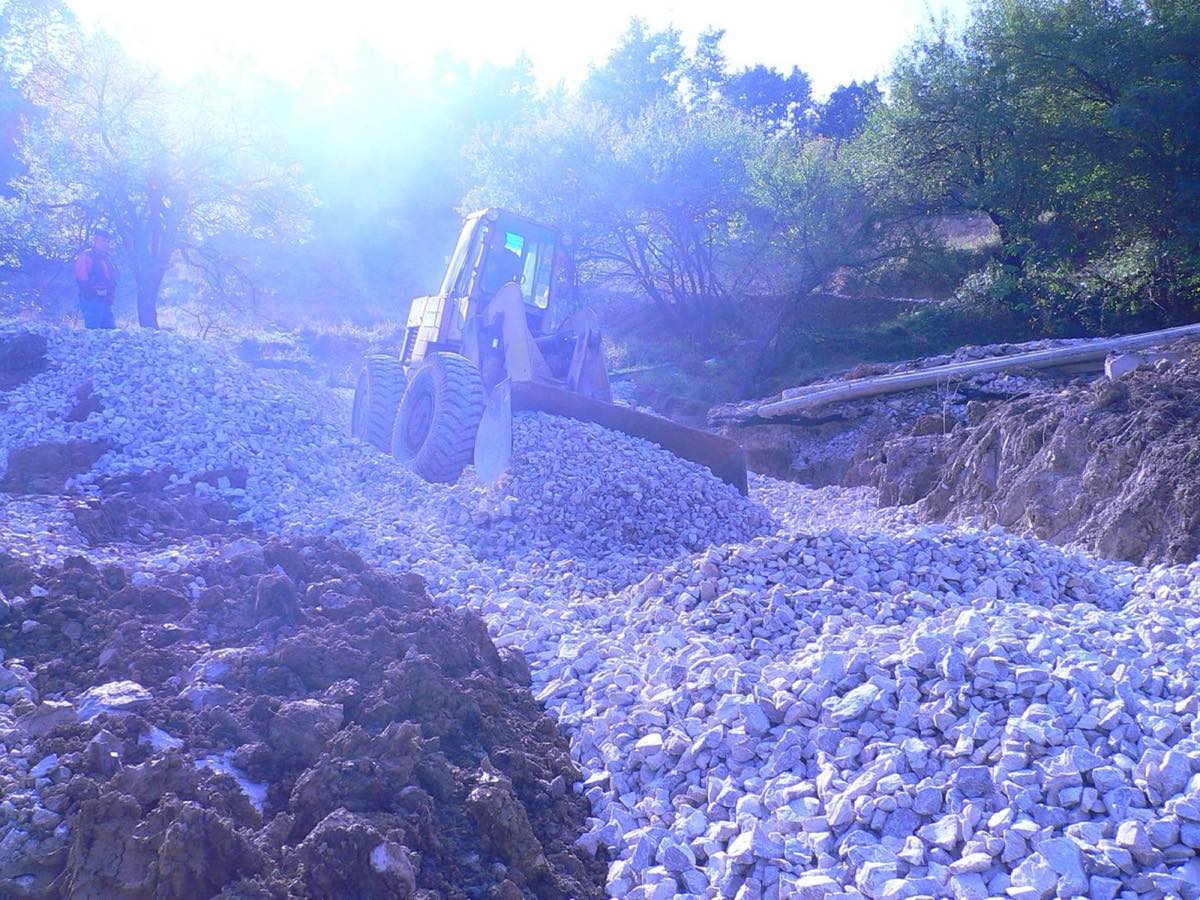
A forecast of future reactivation was produced and stabilisation measures proposed to suit this particular mechanism rather than a standard catalogue solution. The site is characteristic of how the company works: understand the process first, then design the structure.