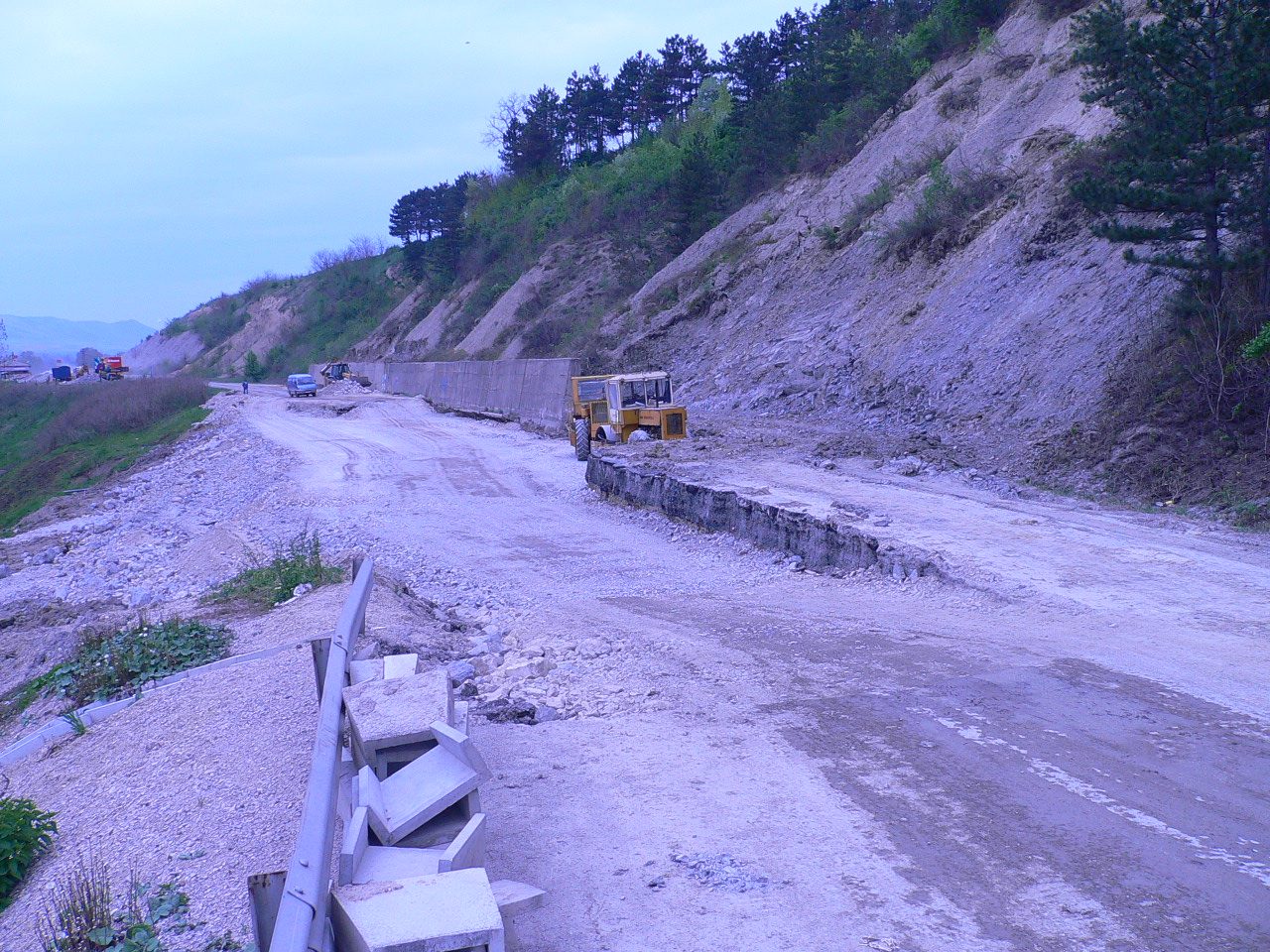
Landslide and excavation support
Surveys and projects for landslide stabilization and support of deep excavation pits.
What starts a slope moving
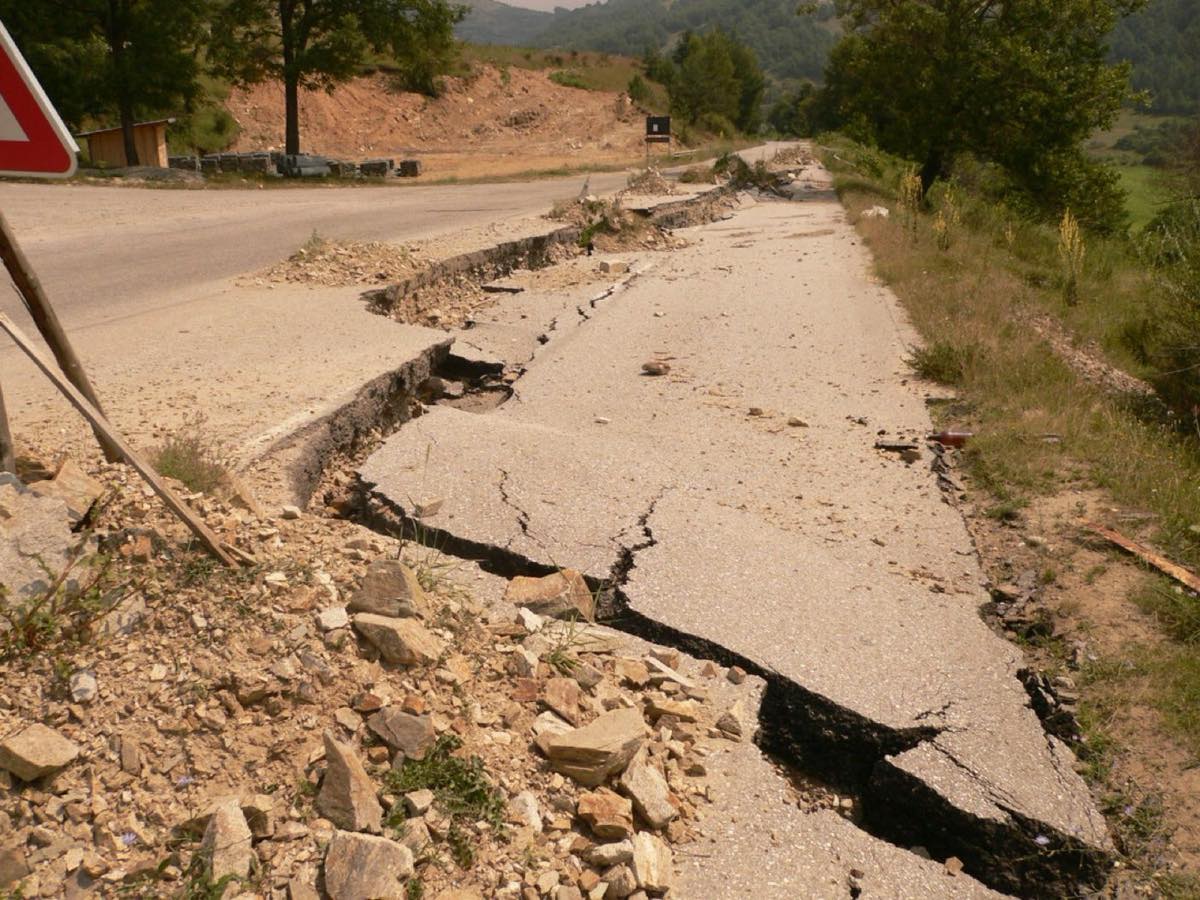
A landslide rarely has one cause. Several usually combine: weak clayey layers with low residual strength, a groundwater table raised by a wet season or a burst water main, the toe of the slope cut away by an excavation, or undercutting by a river or the sea.
Investigation therefore starts by establishing the mechanism — the position of the slip surface, the groundwater regime, the history of movement. A stabilisation design without that stage is an expensive guess.
Stabilisation measures
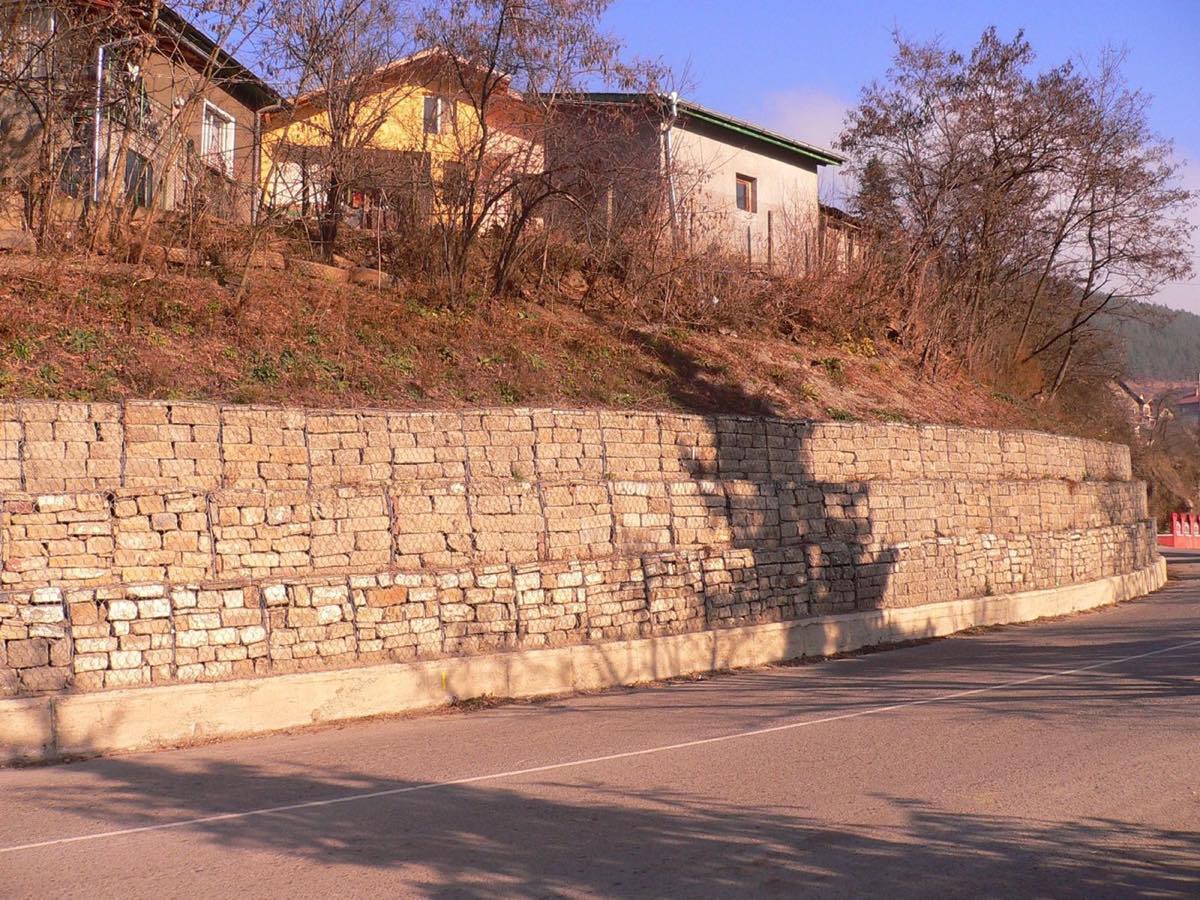
Depending on the mechanism we use reinforced counterfort embankments at the toe, anti-landslide structures of piles and anchors, gabion retaining walls and reinforced fills. For deep excavations in urban settings we design cast-in-place reinforced concrete piles and anchor systems.
Water first
Experience along the Black Sea coast over recent decades shows that most drainage works have had the expected effect and improved slope stability — while expensive groynes against marine abrasion often fail to solve the problem. In many cases the decisive factor is the raised groundwater table, not the abrasion.
Drainage — tunnel galleries, horizontal borehole drains, large-diameter shafts — is therefore an integral part of our solutions rather than an addition to them.
Projects in this activity
- Landslide at Gorni Vadin, Oryahovo municipality
- The „Ezerishte“ landslide, Svoge